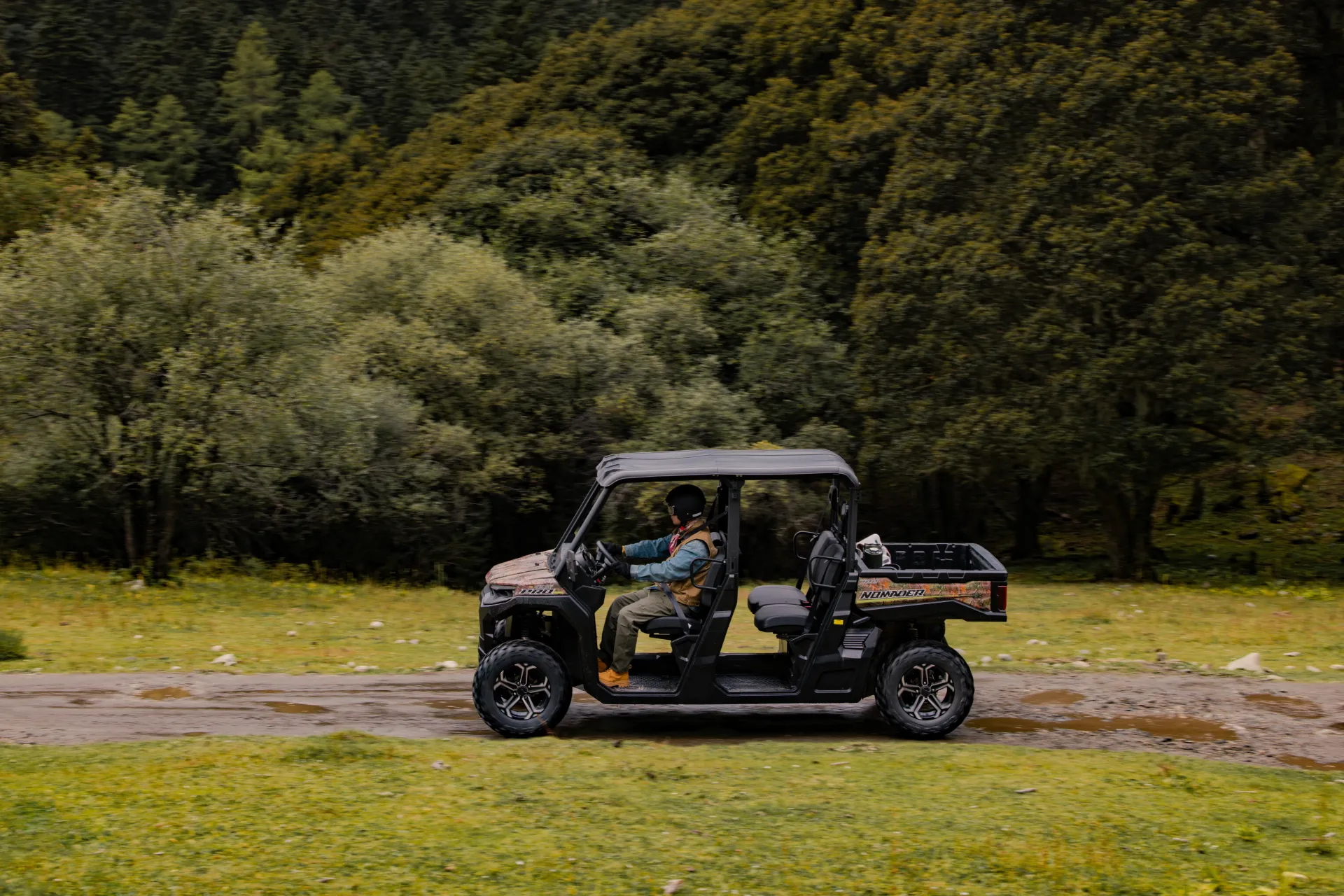
Last month I sat in a conference room in Milan with three of SWM’s most experienced European market managers, reviewing the brand’s five-year expansion data across the continent. The spreadsheets told one story — unit growth, dealer count, market share percentages — but the real insights emerged when the conversation turned to what actually happened on the ground in Germany, France, and Italy. These three markets, superficially similar as wealthy Western European economies with established powersports cultures, demanded radically different approaches. The lessons learned are not just relevant to European operations — they contain principles that apply to any market where a challenger brand is trying to earn trust against entrenched competitors. And at the center of that trust equation, far more than most executives initially expect, sits the hybrid side by side utv program and how it is communicated at the point of sale.
Mr Kowalski: “When we entered Germany, our first instinct was to lead with price and specification — the rational arguments that German buyers are famous for demanding. The specification sheets were excellent. The pricing was aggressive. And our first six months of conversions were terrible. It took us that long to understand that the German buyer’s definition of rationality includes certainty of support, not just certainty of specification. They wanted to know, with documentable precision, what happens when something goes wrong at kilometer 8,000. The warranty document itself became the most-read piece of sales collateral in our German dealerships.”
Germany taught the European team a lesson that has since been codified into every market-entry playbook: warranty terms are not an afterthought to the vehicle — in markets with strong consumer protection cultures, the warranty is effectively part of the product. The German operation shifted its dealer training to spend 40% of product-launch time on warranty processes, claims handling, and parts turnaround commitments rather than on vehicle features. Within twelve months of that pivot, conversion rates improved by 22 percentage points. The German customer, it turned out, was perfectly willing to trust an Italian-designed vehicle — but only when the support infrastructure was documented with enough specificity to satisfy a culture that treats verbal assurances as insufficient. SWM’s standard two-year factory warranty, supplemented by a clearly communicated dealer-network service commitment with maximum repair turnaround times published in writing, became the closing argument that the spec sheet alone could never provide.
Ms Petrova: “France was almost the opposite problem. French buyers responded enthusiastically to the design language and the brand’s Italian heritage — that part sold itself. But France has one of the most fragmented dealer landscapes in Western Europe, with a huge number of small independent shops and very few large multi-brand groups. Our initial dealer recruitment strategy, which worked beautifully in Germany’s consolidated market, completely failed in France. We had to rebuild it from scratch around three things: simplified warranty claim submission that did not require a dedicated service writer, regional parts depots that could deliver overnight to rural Dordogne as reliably as to central Paris, and co-op marketing funds structured for shops with marketing budgets under €5,000 annually.”
The French market restructuring took eighteen months and required the European leadership team to abandon several assumptions they had carried over from the German launch. The key insight was that dealer density matters less than dealer quality when warranty support processes are streamlined. France ended up with 40% fewer total dealers than the original business plan projected, but the dealers they retained were profitable, motivated, and — critically — able to process warranty claims on behalf of customers without the bureaucratic friction that had driven early adopters to independent shops for out-of-pocket repairs. Customer satisfaction scores in France, measured through post-warranty-service surveys, rose from 6.8 to 8.4 on a ten-point scale over the same period that dealer count was being deliberately reduced. The lesson was counterintuitive but durable: a smaller network that handles warranty claims well outperforms a larger network that handles them poorly, and the data shows the difference is measurable in both repeat purchase rates and organic referral volume.
Dr Hernández: “Italy was home turf in name only. Yes, the brand is Italian. Yes, the design studio is in Milan. But the Italian powersports market is one of the most price-sensitive and promotion-driven markets in Europe, and brand loyalty to domestic manufacturers is far weaker than outsiders assume. What worked was treating Italy like a new market — competitive pricing, aggressive test-ride events, and a warranty extension program that allowed buyers to upgrade from two years to four years of factory coverage for a nominal fee at the time of purchase. The warranty extension became our single most effective sales tool, because it addressed the unspoken fear that a relatively young brand might not stand behind its products over the long term. Offering the option to lock in that commitment up front removed the objection before the customer had to articulate it.”
Three Principles for Any Market
The European experience distilled into three principles that travel well beyond the continent. First, warranty communication must match the trust architecture of the local market — written documentation for process-driven cultures, relationship-based reassurance for network-driven cultures, and upgradeable commitment for value-sensitive cultures. One warranty product can serve all three if the communication strategy adapts. Second, dealer selection should prioritize warranty-processing capability over raw sales volume, because a dealer who can close a claim in three days generates more lifetime customer value than one who sells ten additional units but leaves customers frustrated with the ownership experience. Third, warranty extension programs — offered at purchase, not as a post-sale upsell — convert skepticism into commitment at the exact moment the buyer is deciding whether to trust the brand. The hybrid side by side is not merely a legal document; in every market where the brand has succeeded, it has functioned as the bridge between an attractive product and a confident purchase decision. The dealers who understand that distinction are the ones whose showrooms are busy on Saturday morning while their competitors are standing in empty parking lots wondering what went wrong.
The European market lessons also illuminate an important strategic principle about the sequencing of market-entry investments. SWM’s experience in Germany, France, and Italy demonstrates that the order in which a brand builds its market infrastructure — warranty systems before dealer recruitment, parts depots before marketing campaigns, service training before sales incentives — determines whether the market entry succeeds or fails. The brands that succeed in new markets are not necessarily the ones with the best products or the lowest prices. They are the ones that build the support infrastructure before they ask customers to trust the product. The German market’s initial rejection of SWM was not a rejection of the hybrid side by side utv product — it was a rejection of an incomplete ownership proposition that had not yet demonstrated its commitment to post-purchase support. Once the warranty documentation and dealer-service commitments matched the quality of the vehicle itself, the market responded. This lesson applies universally: in any market where a challenger brand is entering against entrenched competitors, the order of operations matters. Product first, support second is a formula for early-adopter disappointment. Support first, product second — or, more precisely, product and support launched as an integrated proposition — is the sequence that converts skepticism into loyalty.